Digital Transformation: A Strategic Guide for Success
Share
The secret is quite similar to the title – befriend the Digital life. Swell in it; don’t slay your business over it! Since digital transformation became a game-changer in our world, small or large, every enterprise needs to or wants to transform themselves to either re-position or to remain relevant and competitive.Many have already gone through the journey to some extent, while some have just started, and some are still trying to wait & watch and then approach and strategize on when & how to start. All are Vikings trying to apply different strategies and tactics to make a killing in the Digital epoch.
But if you were to actually win and sustain the game, be Hiccup, and take a step back to reassess our understanding of this whole transformation, its key elements and tipping points, and envision a possible roadmap for this journey.
First things first, digital transformation has got very little to do with technology.
Surprised?
Digital transformation is about redefining your value proposition and engagement with your customer to solve their problems. It is about integrating innovation, business capabilities, customers and technology together into one platform. It is about understanding your customer’s current and/or future needs and provide an integrated innovative solution leveraging the advancement of technology and business capabilities with a superior customer engagement.
It must be Fast, Flexible, Stable, Secure and Sustainable and continue to do so by swiftly responding to market conditions.
There are two parts to doing this: Digital Strategy and Digital Leadership.
Digital Strategy
It is a business strategy inspired by the capabilities of readily available technologies with an intent to deliver unique integrated business capabilities in a way that are responsive to constantly changing market condition and customer expectation.
Key aspects of this include:
Value propositions of Product or Services
Combination of SMACIT along with biometric & cognitive computing and other latest technology advancements are actually transforming the fundamentals of our ability to provide products and services to our customer. In fact, it is changing the way we define our products and services.
So, what is your value proposition for your customer?
Level and Depth of Customer Engagement
Customer engagement is the relationship with our customer. It must be built on trust, loyalty and passion. It is about how well we are taking care of our customers while providing products or services. The level of information and depth of knowledge we have about our customer w.r.t their needs and necessities indicates our engagement level. Enterprises must leverage this information to create innovative value propositions.
So, how engaged are you with your customer?
Enabler Ecosystem
Enabler ecosystem has three core aspects to support the execution of strategies.
Digital service Backbone – The digital capabilities, engineering assets and ecosystem to support delivery with speed and quality.
Operational Backbone – Operational aspects in large organizations are extremely difficult and complex to change. Which raises the question on how to make your operational engine support the dynamics of the new normal.
Organizational Culture – Culture is at the core of any organization. It drives the enterprises, its strategies and execution. If the culture is not contextualized to the digital age and its traits, it will be nearly impossible to drive your digital strategy.
Digital Leadership
Digital leaders create a collaborative culture & highly empowered teams. They trust these teams to perform, and hold them accountable for outcomes. They decentralize decision making to improve agility and speed. They encourage iterative and incremental value add. They drive the enterprises towards data driven management. They are the owners of the transformation journey, looking at their business as platforms, not just as products and services.
By and large, the overall digital strategy remains same for most of the enterprise. The trick, however, is in the execution and leadership. Having the right digital workforce, involvement and collaboration of your people makes all the difference. Continuous learning and an innovation culture is crucial. Speed, flexibility and sustainability is of primary essence. Alignment of business with digital strategy (or vice versa), a conducive ecosystem for the right enablement and right digital talents will ensure your success and sustainability in this journey.
So, how do we start this journey?
Does the organization need to disrupt existing ways of business and operation? Not necessarily, but eventually existing business and its ecosystem will get disrupted and take a new form on this expedition. New product or service portfolio, new engagement models and new ways of doing things will emerge, and that will become the new norm.
Any transformation journey requires cultural change in the organization. Digital transformation requires fundamental architectural change of the business and organization. But of course, we cannot stop the existing business to transform ourselves to make us more competitive and relevant. Therefore, we must start small and move fast, and progress towards making the organization digital-ready. Speed is the essence here. As different disruptive innovations are entering the market every now and then, existing organizations must move faster before new entrants can displace them. Instead of waiting for someone to take the lead, initiate the journey. Pivot the decision based on market response.
Following are six key steps to start the journey and continue successfully:
Strategic Alignment & Planning
Establish a grand vision of your transformed organization
Define your digital strategy
Get the Right Talent
Get the right leadership on the ground
Set your Approach Right
Establish a culture of continuous learning with Reward and Risk
Fearless culture of innovation with Reward
Highly collaborative team
Global mindset
Fail safe environment
Empower employees
Product based innovation
Decentralized decision making
Data driven execution and management
Build Digital Capabilities – Though it takes time, get started!
Continuously build business aligned digital capabilities
Integrate the technology advancement with business capabilities
Flawless & Fearless Execution
Execute. Execute. Remember, speed is the essence!
Optimize and/or calibrate operational engine
Set the Governance Mechanism
Measure. Decision. Pivot.
How are we doing this at Altimetrik?
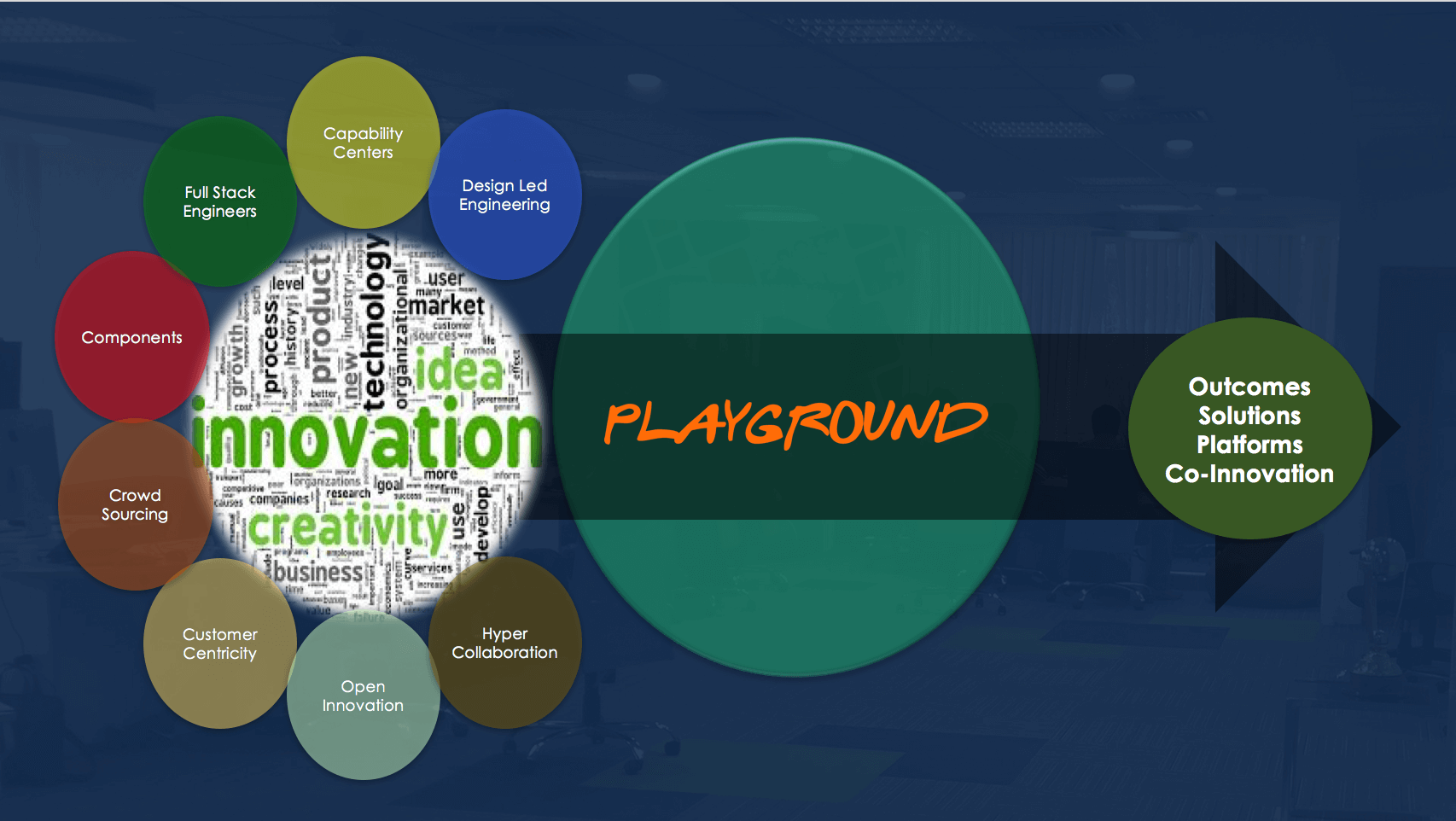
At Altimetrik, we are transforming ourselves, as well as working with our customers (partners) as catalysts in their transformation journey. Our inbuilt operational backbone, Playground, supports three key aspects of transformation – Right Talent, Right Approach and Digital Capabilities. As a unique transformation enabler, Playground helps us (& our partners) to –
Get the right talent and transform existing one
Establish the culture of innovation – collaboration, product and global mindset, a failsafe ecosystem and data driven management
Build digital capabilities and integrate them with business capabilities
Build a strong engineering backbone to support speed and quality
With Playground emerging as a strong catalyst, we are focused on the execution of our digital strategy with a close monitoring & governance mechanism.*The CIO Review published a regular version of this awesomely cool article here. You can read that too! About Author Biplab is a visionary leader and transformation specialist with 18 years of experience in the IT Industry on various software platforms and technologies. He comes with extensive experience in delivery & process advocacy, establishing transformation practices, driving mission critical transformation initiatives across the organization, establishing and driving scaled agile COE to facilitate business growth & agility.As the Head of the Digital Transformation Practice at Altimetrik, Biplab truly believes that Lean Agile is not just a methodology or a process prescription. It is a philosophy, a way of working that can be used at any setup or any kind of work – be it software product or service development or support work or personal life.